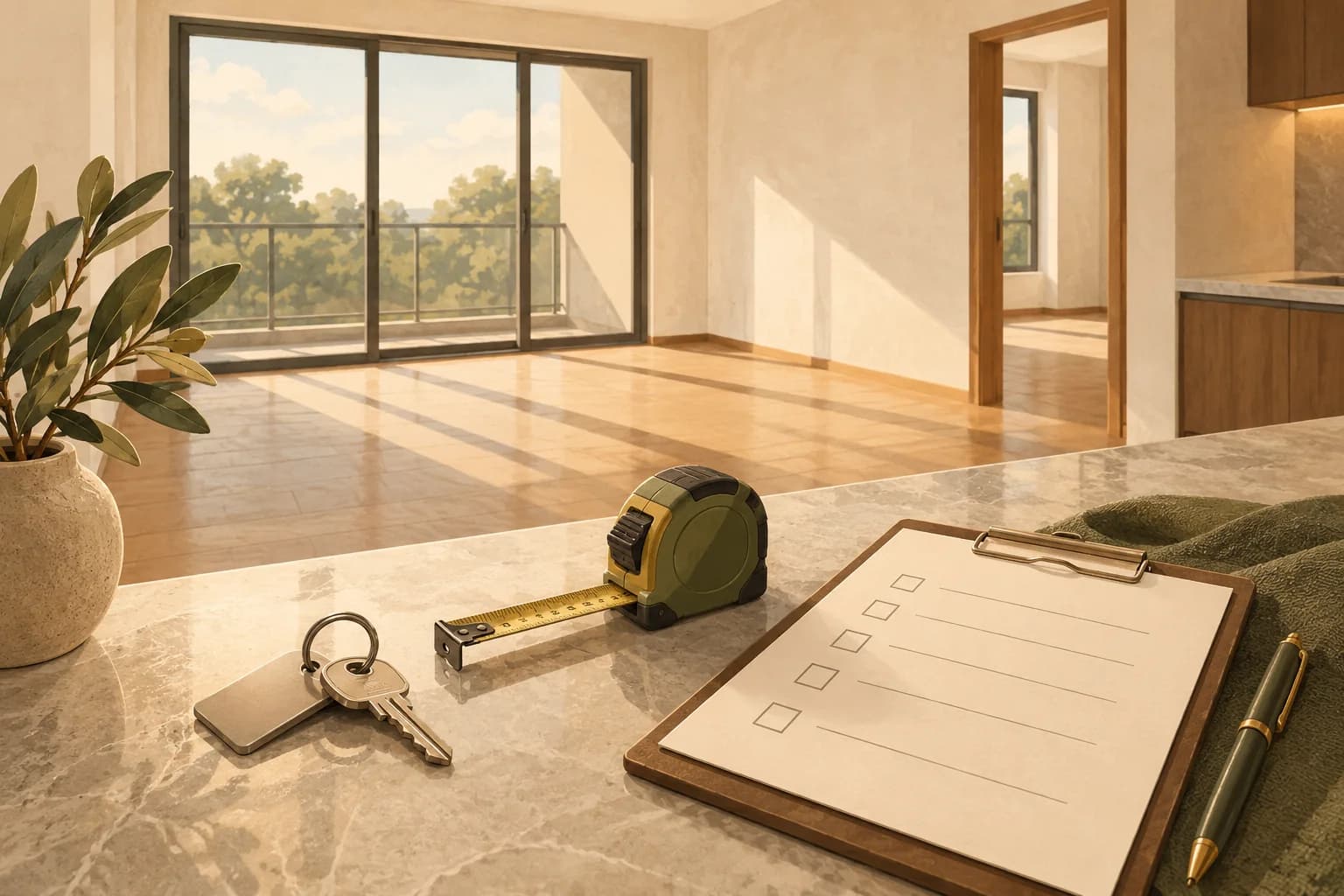
Key collection is a handover with documents, access items and an opportunity to record the unit's condition. Prepare a room-by-room route and leave time to ask questions. A rushed first visit can make later defect discussions harder, especially if renovation begins immediately.
What should be brought to the appointment?
For an illustrative two-bedroom unit, bring the unit plan, contract references, a phone with sufficient battery, a small torch, a charger or simple tester where permitted, paper for notes and the developer's defect-reporting instructions. This unit is fictional. Ask in advance whether utilities are active and what tests may be done. URA's property-buying guidance explains the buyer's handover and defects context. The sale agreement and developer process control the actual notice and rectification steps. Our defects log guide supplies a room, location, photo and follow-up structure.
At handover, count keys, cards, access devices, appliance manuals and warranties against the developer's list. Ask who activates utilities, how building access works and whom to call about a safety issue. Record the date, person present and documents received. Do not sign a statement you do not understand; ask the lawyer about its effect. The Law Society's lawyer finder can help locate a qualified professional, but it does not endorse a specific firm.
How should the first walk be organised?
Start at the entrance, then follow the same direction through every room. Check visible finishes, doors, windows, sanitary fittings, outlets or fixtures that can safely be tested, and note inaccessible items. Take wide and close photos with room labels. A fictional buyer may find a cabinet door that does not close and a water mark whose cause is unknown. Record observations, not a diagnosis; ask the developer for the correct reporting channel. Our defect-inspector guide helps decide whether a paid second inspection adds value.
Do not remove or alter an area while a material defect is being documented without understanding the consequence. If renovation is planned, give the contractor the relevant unit and management rules after the initial condition is recorded. The renovation contractor guide helps sequence quotes, approvals and handover. If a concern may affect contract rights, ask the lawyer promptly rather than relying on a social forum timeline.
What happens after leaving?
Upload observations through the developer's stated method, keep submission evidence and note the promised response. Set a follow-up date. Review key and access security, household insurance and emergency contacts before moving valuables in. Our insurance-after-keys guide provides questions for policy documents. You can send NewLaunchGuru a walkthrough-checklist question for editorial guidance. We do not inspect units or represent the developer.
If more than one buyer attends, divide the first walk sensibly: one reads the developer’s handover list while the other records the unit condition. Do not split into separate rooms so quickly that neither person knows what was checked. Set a time for a second quiet review if the appointment is short. Label photographs immediately with room and location; a gallery of unlabelled close-ups is hard to use later. Ask the developer how to report an issue that becomes visible only after utilities are active or a fixture is used.
Common questions
Does the first visit have to find every concealed fault?
No. Record accessible observations and follow the contract's defect process.
Should a buyer diagnose the cause of a water mark?
Record location and evidence, then ask the responsible party or qualified professional.
Can renovation begin before the unit's condition is recorded?
Document and submit relevant issues first, then ask advisers about sequencing.
Sources
- property-buying guidance ura.gov.sg
- lawyer finder lawsociety.org.sg
Something changed or worth adding?
Send a correction or suggestion