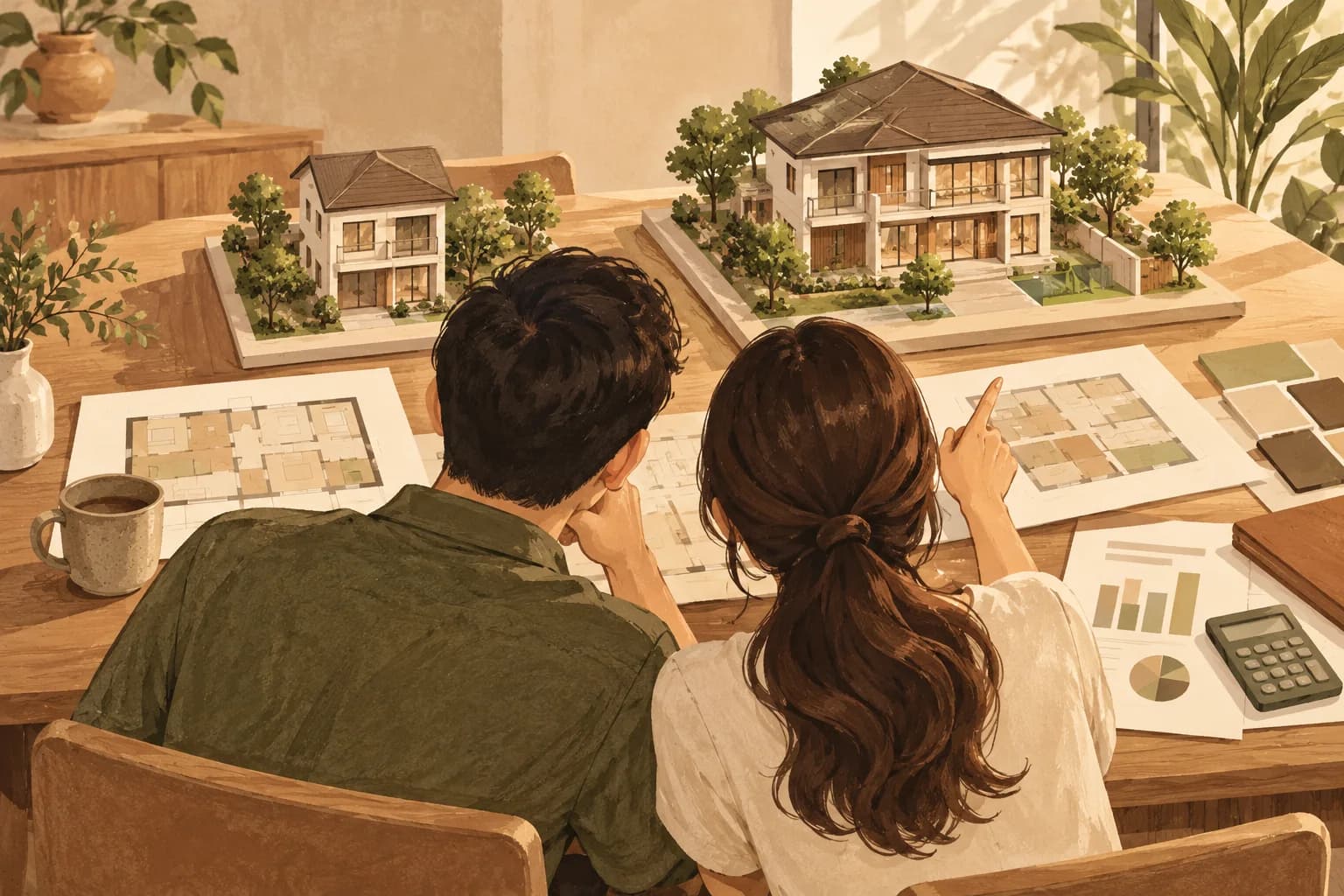
A neighbourhood walk can test how a new-launch location fits daily life. It cannot prove future noise, traffic or property value. Walk at relevant times, record what you actually observe and keep official plans separate from on-the-ground impressions. If a project is still being built, note that the final entrance and surroundings may differ.
Which routes should be walked?
For an illustrative family, choose the route to transit, a grocery shop and a possible school. This family is fictional and no actual site visit is claimed. Start at the proposed project entrance shown on current plans, not the showflat. Note crossings, shade, slopes, lift or ramp access, pavement width and the time taken at a normal pace. Walk once on a weekday commute and once at the hour the family would return home, if possible. Record date, weather and route so a later comparison is fair.
If school access matters, MOE's school-choice guidance and distance guidance are the official sources for primary-school decisions. A walk that feels short is not an eligibility ruling. Our school-distance guide explains why the actual address and MOE's current rules need checking. Ask the developer which address will be used and verify it through the official process at the relevant time.
What should be checked against documents?
Compare the observed route with the project site plan and current official information. URA's property-buying guide gives context for project documents; the site-plan guide helps read access and shared spaces. For nearby vacant land, do not assume it will remain empty or that an online comment proves its future use. Ask for the relevant official planning information and mark uncertain changes. An attractive weekend walk may differ from a weekday construction period.
A fictional Unit A may be closer to the gate but face a service driveway; Unit B may require a longer walk and offer a quieter orientation. Compare the buyer's actual priorities and verify what each plan shows. Do not claim to know noise levels without a real observation, and even a real observation is only a snapshot. The compare-units guide helps place location alongside layout and cost.
What belongs in the walk log?
Use columns for route, date, time, observed condition, document to check and open question. Take photos only where allowed and avoid photographing strangers unnecessarily. Ask the developer or agent about entrances and planned facilities in writing. CEA's agent guidance helps buyers clarify who is representing them and how answers are recorded. Revisit the walk if a material fact changes before purchase.
You can send NewLaunchGuru a neighbourhood-check question for editorial guidance. We have not walked a named project for this article or verified a particular development.
After the walk, compare notes separately from memory of the showflat. A simple score for route safety, daily errands and comfort can clarify trade-offs, but do not add false precision. If two adults disagree, record the specific observation or priority behind the difference and revisit only that point.
Bring the notes to a later viewing so marketing impressions can be compared with the recorded route.
Common questions
Does a short walking time prove school-distance eligibility?
No. Use MOE's current address and distance rules for the actual property.
Can one quiet visit prove the area is always quiet?
No. Visit at relevant times and treat observations as dated snapshots.
Should a vacant plot be assumed to remain vacant?
No. Check official planning information and label uncertainty.
Sources
- school-choice guidance moe.gov.sg
- distance guidance moe.gov.sg
- property-buying guide ura.gov.sg
- agent guidance cea.gov.sg
Something changed or worth adding?
Send a correction or suggestion