New-launch marketing can be useful for discovery, but buyers should separate a verifiable fact from an illustration or forecast. Take a screenshot of each claim that matters to the decision, then ask for the source document and date. This turns vague confidence into a manageable due-diligence list.
Which claims deserve an evidence request?
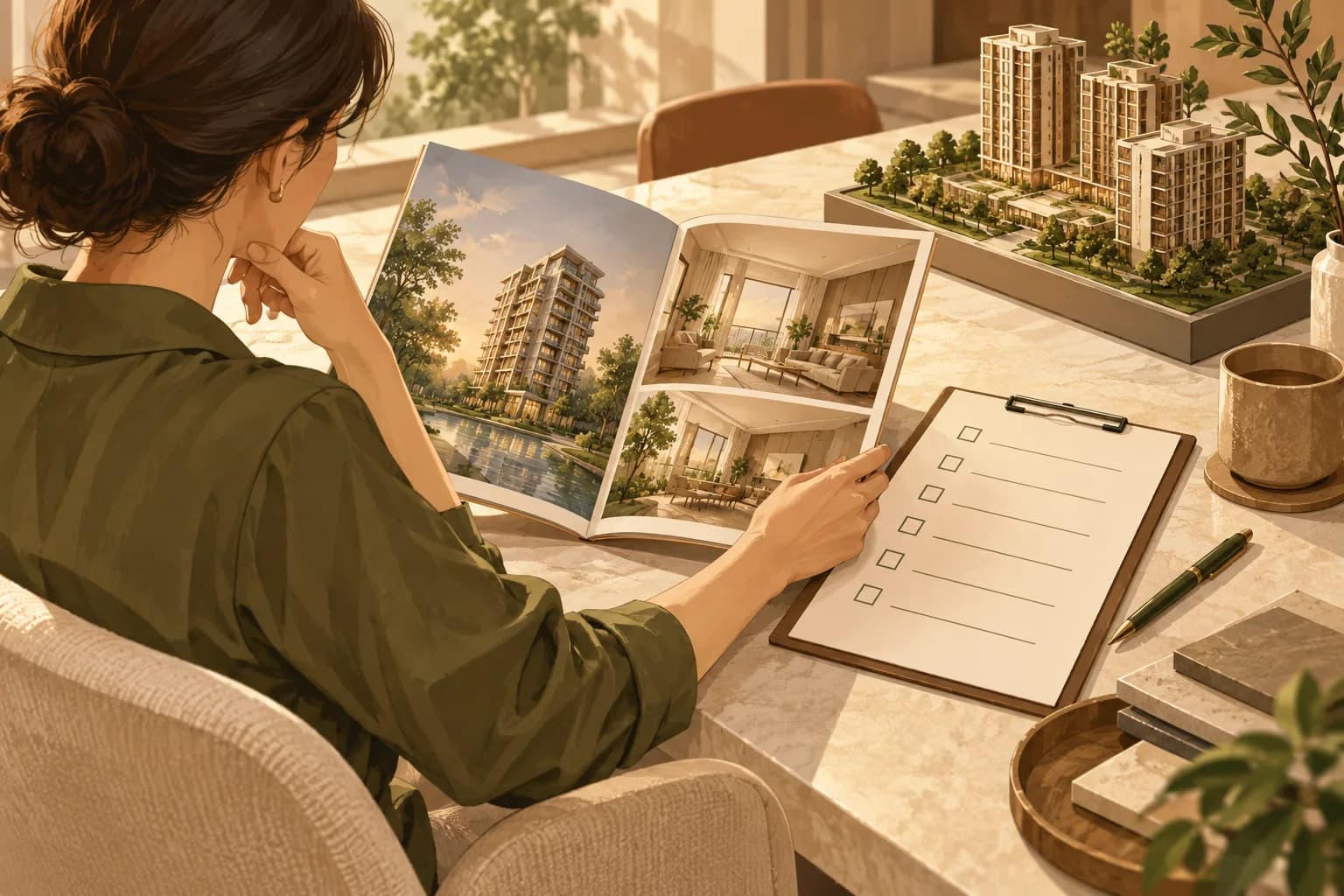
For an illustrative project brochure, mark claims about floor area, materials, facilities, school distance, transport, rental demand and completion timing. This brochure is fictional. URA's housing-developer guidance and property-buying guide are the official starting points for regulated project documents and buyer stages. Ask which plan or contract page governs the actual unit, and which image is an artist's impression. Do not treat a lifestyle photograph as evidence of a facility or future view.
Check location claims independently. Our school-distance guide explains MOE's official address checks; our site-plan guide helps identify access and shared areas. If the claim is “five minutes to the station”, ask whether that is a walk, drive or estimate from a particular exit and test the route yourself. If a sales person quotes a future nearby project, ask whether it is confirmed, proposed or simply discussed. Do not invent a visit or pretend to have verified a walk you have not taken.
How should an agent's explanation be handled?
Record the name and role of the person who gave an answer. CEA's guidance on engaging a property agent helps clarify registration, representation and written terms. Ask for a follow-up email containing the exact claim and source rather than relying on a hurried showflat conversation. CCCS's quality-claims guidance offers a broad reminder that strong product claims should be supported; property-specific rights and duties must be assessed under the relevant law and contract.
A fictional Buyer A sees a claim that a unit has a “panoramic view”. The buyer asks for the approved plans, checks the proposed outlook from the actual floor if accessible and asks what nearby land is planned for. Buyer B accepts the brochure photograph. The comparison is about verification method; neither buyer can guarantee a future view. For projected rent or capital value, write down the assumed rent, vacancy, costs and source. Our rental-yield guide makes those assumptions visible.
What should be resolved before booking?
Put each unresolved claim in a table with the person asked, evidence received and effect on the decision. If it is material and no adequate answer arrives, pause. Ask the lawyer to explain how project representations relate to the sale documents. Keep the brochure and written answers with the transaction file. A buyer can like a project while still refusing to act on an unsupported statement. You can send NewLaunchGuru a claim-check question for editorial guidance. We do not verify a developer's marketing on the buyer's behalf or recommend a purchase.
Check whether a claim refers to the exact unit being considered or merely to the project as a whole. A facility may exist in the development without being close to the unit; a floor plan may be typical rather than contractual. Ask the developer to identify the unit code and governing document on every material answer.
Common questions
Is an artist's impression a certain final finish?
Check the approved plans, specifications and sale documents for the relevant feature.
Can an agent's verbal rent projection be treated as income?
No. Record assumptions and supporting evidence, then stress-test vacancy and costs.
What if a material claim cannot be sourced?
Pause the decision and seek the relevant written document or qualified advice.
Sources
- housing-developer guidance ura.gov.sg
- property-buying guide ura.gov.sg
- guidance on engaging a property agent cea.gov.sg
- quality-claims guidance ccs.gov.sg
Something changed or worth adding?
Send a correction or suggestion